In a recent online training session for young leaders in the arts sector, a fellow panellist, an experienced board chair, likened her role to that of a choreographer.
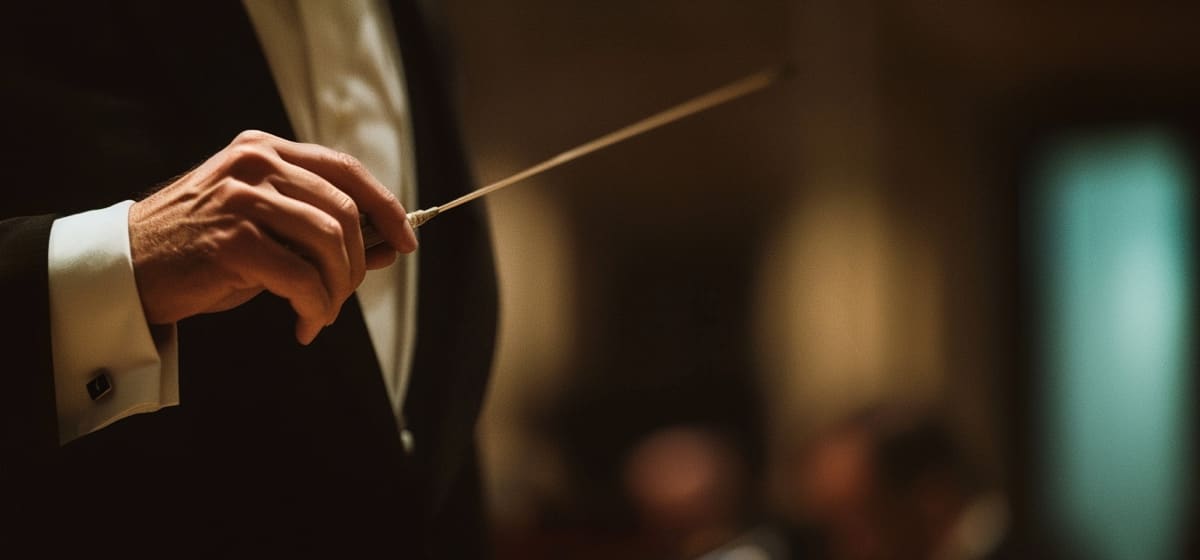
A more familiar metaphor, which also has an artistic reference point, is that of an orchestra conductor. For example, in their book Inside the Boardroom, Richard Leblanc and James Gillies identify two types of chairs: ‘caretaker-chairs’ and ‘conductor-chairs’. (1)
Of the two, Leblanc and Gillies laud the conductor type for various reasons. For example, because a conductor-chair typically:
- Relates well to management.
- Has a keen interest in and establishes the tone and culture for effective corporate governance.
- Understands group and individual dynamics and can listen and skilfully manage a wide range of director behaviours to obtain a unanimous agreement on an issue.
- Is an active leader in key board processes, such as agenda setting.
The similarity between an orchestra conductor, who combines and utilises a diverse range of musicians and instruments, and an effective board chair, who brings out the best in their fellow directors and unlocks the board's full decision-making potential, is clear.
But, that said, might the idea of a choreographer not also have merit and perhaps add to our understanding and expectations of our board chairs? Can comparing a governing board chair to a choreographer instead of a conductor be a more nuanced and fitting metaphor, given our knowledge of board chair effectiveness? Let's start by comparing what the conductors, choreographers and board chairs do in their respective roles.
Role comparisons
1. Interpretation
- A conductor interprets the musical score and guides musicians towards a unified performance.
- A choreographer interprets a concept or story and translates it into the coordinated movement that tells the story.
- A chair interprets the organisation's purpose and priorities, shaping the board’s work around them.
2. Unify Diverse Contributors
- A conductor brings together different instruments and musicians to play in harmony.
- A choreographer blends individual dancers’ strengths into cohesive group performances.
- A chair aligns diverse board members’ perspectives and expertise towards decisions in relation to a common goal.
3. Facilitate (Rather Than Perform)
- A conductor does not play an instrument but enables others to perform at their best and create a synergistic whole.
- A choreographer does not usually dance but creates conditions for dancers to succeed.
- A chair does not manage operations but ensures the board and chief executive can play their complementary parts in corporate leadership.
4. Set the Tone and Tempo
- A conductor controls the tempo, volume, and mood in real time.
- A choreographer sets the emotional tone and pacing of movement sequences.
- A chair sets the tone for board culture and the tempo of meeting decision-making processes.
Two additional points of comparison
- All three roles require respect, authority, and the ability to inspire and collaborate with high-level contributors.
- A conductor and a choreographer both work within formal structures (musical score or dance composition) but allow room for interpretation and creativity. Within a formal legal framework, a chair balances the conduct of the governance process with flexibility and strategic insight.
Differences that matter
So, at first glance, the roles seem similar in many respects. (2) But are there also significant differences that might lead to a preference for one over the other, or indeed, a search for a different metaphor altogether?
For example, the conductor model suggests a highly visible, real-time control over the execution of the ‘performance’ (e.g., the board meeting), which doesn't always align with the often behind-the-scenes, facilitative role of a board chair working with colleagues and senior executives. Although a board chair is responsible for ensuring the board ideally starts with the end in mind (organisational purpose and desired outcomes), operates within a governance policy framework, a long-term work plan, and meeting agendas, changing circumstances often require them to react and adapt in real time. Unlike an orchestra, a board needs more flexibility. In conditions of high risk and uncertainty, it cannot always follow a pre-existing score. Also, unlike musicians under a conductor’s direction, a chair’s fellow board members are essentially peers with the same legal rights and obligations.
The choreographer designs and structures the performance but doesn’t usually perform during it. Choreographers typically complete their work before the performance starts, while a chair remains actively involved throughout. A board chair engages dynamically with the board and the chief executive both during and between meetings.
Conclusion
Although metaphors are rarely perfectly accurate, these variations don't seem to undermine the reasonable use of either metaphor when considering and describing the chair's role. While the orchestra conductor is a more common comparison, likening a governing board chair to a choreographer can sometimes be a more subtle and fitting metaphor, depending on how you interpret the chair’s responsibilities. In particular, a choreographer might be more appropriate in situations where the chair’s role focuses on enabling, coordinating, and empowering rather than direct control. It presents leadership as facilitation and design, rather than domination, which often better reflects governance in practice.
Notes
(1) Richard Leblanc and James Gillies (2005). Inside the Boardroom. Mississauga, Ontario, John Wiley & Sons Canada Ltd. Chapter 9.
(2) A more recent exploration of the conductor metaphor by Cassandra Kelly draws a strong parallel with the board chair role (The Chair: Conducting the Boardroom Symphony. Boards and Directors, 1 May 2025)